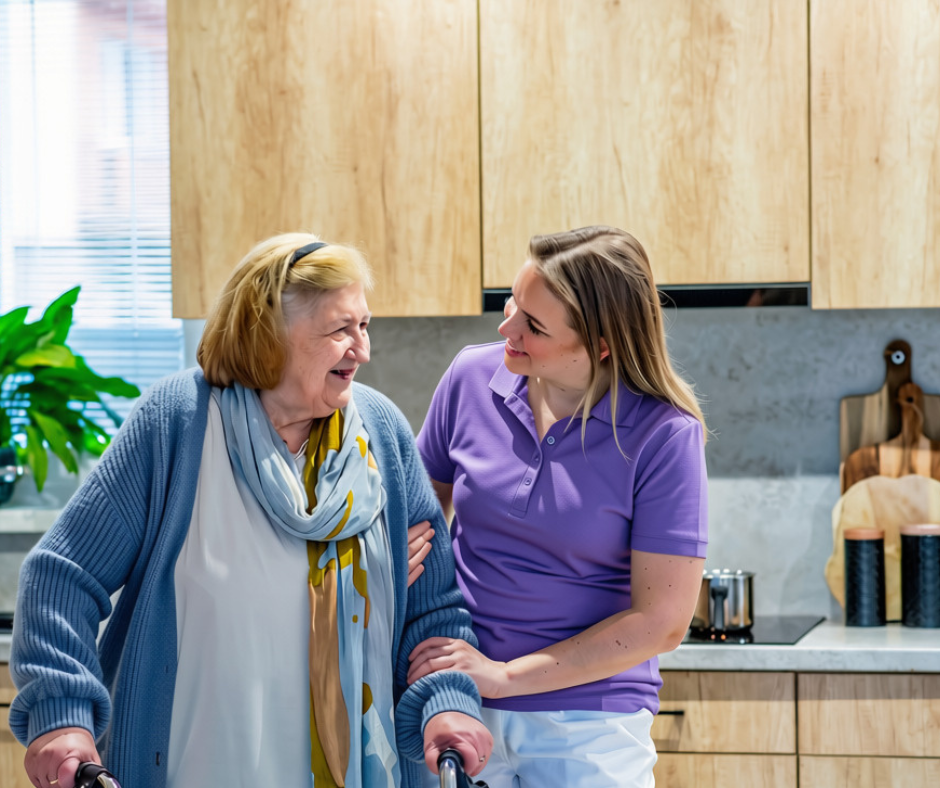
Many seniors prefer to stay at home, continue with their normal daily activities, and make their own choices. But everyday tasks can get harder over time. A home caregiver offers hands-on support without taking away control. The right caregiver helps older adults live safely and confidently, right where they feel most at home.
Who is a Home Caregiver?
Definition of a Home Caregiver
A home caregiver helps older adults with the nonmedical parts of everyday life. These services can range from personal care, meal preparation, mobility assistance, transportation, companionship, medication reminders, and light housekeeping.
The goal isn’t to take over. A good caregiver encourages seniors to keep doing what they can, safely.
Why Independence Matters as We Age
Physical Benefits
Staying active can help keep seniors strong, mobile, balanced and coordinated. Support with walking and daily living can also reduce the potential of injury.
Emotional Benefits
Making personal decisions supports dignity and confidence. Being in familiar surroundings can help the elderly to reduce anxiety and get more personal control.
Social Benefits
Older adults who live at home are able to stay active with family, friends, neighbors and community activities. Visits by caregivers also help to alleviate loneliness.
Financial Benefits Compared to Residential Care
Personal care and medication support
A caregiver helps with medication reminders that follow the schedule set by the senior’s health care providers. They also get help with bathing, dressing, grooming and toileting needs.
Meals, housekeeping and travel
A caregiver can prepare healthy meals, run errands for groceries and ensure hydration. They also do light housekeeping and help make appointments.
Managing mobility, fall risk and exercising
Walking, transfers and mobility devices are supported. They can alert to hazards like clutter, loose rugs, or lighting and promote safe activities.
Companionship and Memory Support
The day is structured by conversation and hobbies, as well as shared activities. In cases of memory loss, caregivers can help seniors stick to their routines and provide them with a soothing reminder.
Signs that a Senior May Benefit from a Home Caregiver
Some indications include challenges in bathing, cooking, cleaning, shopping or dressing. Other signs of support needs include frequent falls, missing prescriptions, weight loss, memory problems and social isolation.
When family caregivers are feeling overwhelmed, stressed, or have a demanding job and family commitments, professional care may be particularly beneficial.
Home Caregiver vs Family Caregiver
Family caregivers offer emotional support and familiarity, but may be less trained and less available. Caregivers are generally experienced in providing personal care, mobility, dementia care, safety and routine.
Home visiting may also help lower family stress. Family members can spend quality time with their family member, rather than dedicating all their time to home responsibilities. A blend of family and work-based care can be more viable.
Benefits of Hiring Professional Home Care Services
Professional elderly care at home can offer individualized plans, flexible hours, enhanced safety and genuine care that can evolve. Regular support can help a lot. The expert helps enhance nutrition, cleanliness, mobility and companionship, and quality of life.
Post hospital care may also assist aged people to maintain recovery programs and preventable infections.
Sequoia Senior Solutions is family owned and has served the North Bay senior community for over 20 years. We offer personalized, compassionate in-home care for seniors and their families.
Common Mistakes that Families Make
Families may not pay attention to the early signs, wait until after a fall, or think that taking help means giving up independence. Failure to engage in such discussions about care preferences can also restrict options in an emergency.
Seeking support early gives families more choices when it comes to care.
How to Choose the Right Home Caregiver
Check credentials, screening, experience and references. Talk about any specific needs for care and ask how the care plan will be formulated and amended.
Check how patient, communicative, and prompt they are with the work. Also check how they interact with your loved one. Verify plans, emergency protocols, supervision and backup as well.
Locations We Serve
We proudly provide compassionate caregiver services for seniors and families throughout:
● Mendocino, CA
● Lake County, CA
● Sonoma County, CA
● Marin County, CA
● North Bay, CA
● Napa County, CA
Final Thoughts
With a home caregiver, a senior can maintain safety, independence, dignity and comfort in their familiar environment. The right support enables older people to live life to the fullest in their own homes. It also provides family members with increased confidence and relief.
FAQs
What’s it like working as an in-home caregiver?
This includes helping with tasks, being supportive, kind, consistent, dependable and establishing good relationships with seniors and families.
What questions to ask before hiring a caregiver in Sonoma County?
Request screening, training, references, availability, emergency protocol, communication and experience with your loved one’s needs.
Who offers in-home care services in Napa County.
Research the type of provider you’re searching for, and find one that has screened caregivers, flexible schedules, customized plans, and reliable communication.
Are there family owned home health care agencies in Sonoma County?
Yes. Sequoia Senior Solutions is a family business that offers services to North Bay seniors in the communities.
What is the best in-home care agency in Mendocino County?
Select according to the quality of the caregiver, experience, screening, flexibility, communication, and the individual’s care needs.
What is the best in-home care agency in Sonoma County?
Compassionate caregivers, personalized care, reliable scheduling, and responsive family support should be provided by the right agency.